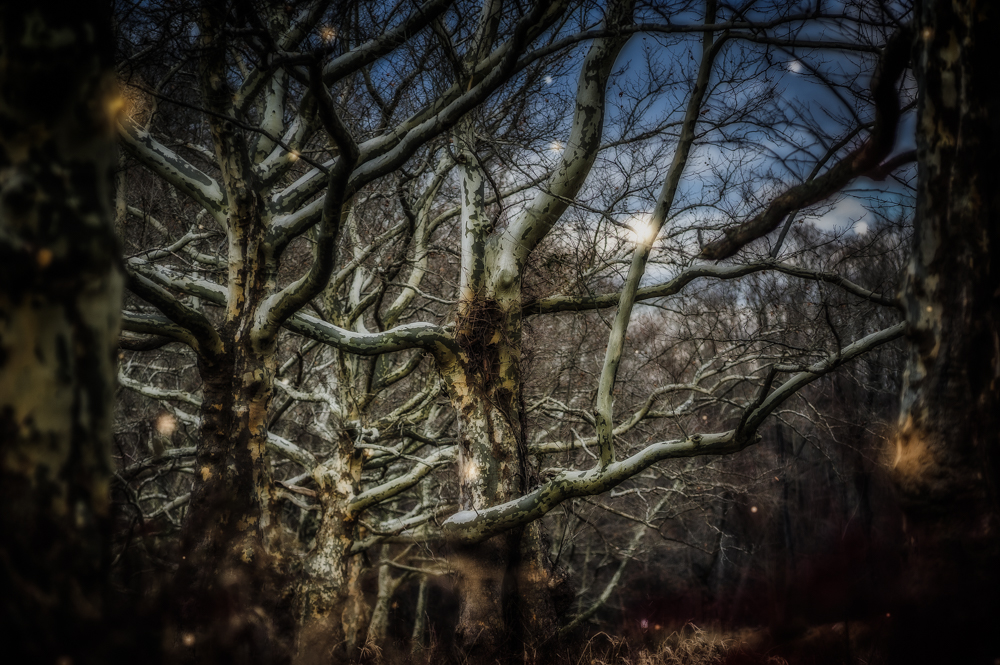
Where is Sleepy Hollow Country?
Sleepy Hollow Country is a region of New York’s Hudson River Valley where history, folklore, and the unexplained have been mingling for over two centuries. Originally used by Washington Irving to describe the valley of the Pocantico River in his 1820 short story “The Legend of Sleepy Hollow,” the name has since expanded to encompass the broader Hudson River towns that share the same strange enchantment—or at least claim to.
The Witching Power
At its heart, Sleepy Hollow Country is defined by what Irving described as a place under “the sway of some witching power, that holds a spell over the minds of the good people, causing them to walk in a continual reverie.” This is a landscape where residents are “given to all kinds of marvelous beliefs” and “frequently see strange sights, and hear music and voices in the air.” Whether this stems from genuine supernatural influence or the particular character of the place remains conveniently ambiguous.
A Catalog of Strangeness
Hidden beneath the facade of suburban modern life lies a wealth of folklore: haunted houses, churches, and taverns (the latter category being particularly well-documented); ghostly women in white wailing atop cliffs; pirates and highway men; unsolved murders, UFO sightings, and—because apparently no catalog of local strangeness would be complete without it—a plague of exploding mosquitoes that terrorized North Tarrytown in 1911. Yes, gasoline-drinking, combustible mosquitoes. The Hudson Valley takes its eccentricities seriously.
Legends in the Landscape
The legends are rooted in the land itself. Spook Rock, an ancient boulder in Rockefeller State Park Preserve, was said to be where celestial maidens descended to dance. Nearby lived Hulda of Bohemia, the alleged Revolutionary War-era witch and herbalist who has enjoyed quite the posthumous career makeover into a celebrated local legend. Raven Rock harbors multiple ghosts—because one per landmark would apparently be insufficient—while the Devil’s Footprints at Croton-on-Hudson puzzle scientists with mysterious impressions in solid rock.
This is also Revolutionary War country, where the “Neutral Ground” between British and Continental forces saw every crime committed in the names of King and Congress alike, proving that partisan chaos is nothing new in these parts. Historical figures blend seamlessly with spectral inhabitants who never left.
Irving’s Lasting Spell
Irving’s “The Legend of Sleepy Hollow” both captured and amplified this atmosphere, creating a feedback loop where the tale enriched the landscape’s mystique and the landscape’s genuine oddities lent credence to the fiction. Irving cleverly wove real landmarks into his story, leaving readers “delightfully unsure of their footing,” never certain where history ends and legend begins.
Today, Sleepy Hollow Country remains a place where “history and lore are forever entwined,” where the past refuses to stay buried, and where Irving’s drowsy, dreamy influence continues to hold sway. The region wears its strangeness with pride, maintaining that peculiar atmosphere where the extraordinary feels almost ordinary, and where even the most skeptical visitor might find themselves glancing over their shoulder on a dark autumn night—just in case.
“The whole neighborhood abounds with local tales, haunted spots, and twilight superstitions; stars shoot and meteors glare oftener across the valley than in any other part of the country, and the nightmare, with her whole nine fold, seems to make it the favorite scene of her gambols.”
The Legend of Sleepy Hollow, Washington Irving